
Philadelphia County Pennsylvania Sex Offender Registry
Philadelphia County is Pennsylvania's most populous county and its only consolidated city-county, meaning the City of Philadelphia and Philadelphia County are the same governmental entity. With a population exceeding 1.5 million residents spread across dozens of distinct neighborhoods, Philadelphia has one of the largest concentrations of registered sex offenders of any jurisdiction in the Commonwealth. The Philadelphia Police Department serves as the primary enforcement agency for Megan's Law within the city, operating a dedicated Special Registration Unit that handles compliance verification, community notification for Sexually Violent Predators, and coordination with the Pennsylvania State Police central registry.
Philadelphia County Quick Facts
About the Philadelphia County Sex Offender Registry
The City of Philadelphia provides municipal services and public safety information through the official city website.
The Philadelphia County sex offender registry operates as part of the statewide Pennsylvania Megan's Law database managed by the Pennsylvania State Police. Because Philadelphia is a consolidated city-county, all registry functions within the jurisdiction are handled by city agencies rather than a separate county government. The Philadelphia Police Department's Special Registration Unit coordinates the intake of new registrations, the verification of existing registrations, and the notification of community members when a Sexually Violent Predator moves into a neighborhood.
Philadelphia's size and density create unique challenges for registry administration. Offenders may live in densely packed row-home blocks where neighbors are in close proximity, or in apartment buildings where dozens of residents share a single address. The PPD's Special Registration Unit is staffed to handle these complexities, verifying registrations across all of the city's police districts and ensuring that data transmitted to the PSP central system is accurate and timely. PSP Troop K also serves Philadelphia and provides an additional layer of oversight for compliance and enforcement activities.
The registry is publicly accessible at no cost through the Pennsylvania State Police Megan's Law website. Philadelphia residents can search by name, zip code, or specific street address to locate registered offenders in any part of the city, from Kensington and Frankford to West Philadelphia, South Philly, and the Northeast.
Note: Philadelphia city government information is available at phila.gov.
How to Search Philadelphia Sex Offenders
Searching for registered sex offenders in Philadelphia is done through the Pennsylvania State Police Megan's Law online portal. The search tool accepts several types of input, giving users multiple ways to find relevant records.
Residents can search by the offender's name if they have a specific individual in mind. A county-level search filtered to Philadelphia will return all currently active registrants within the city limits. Zip code searches are particularly useful in a large city like Philadelphia, allowing users to narrow results to their immediate neighborhood. Philadelphia's zip codes span from 19100 through the high 19100s, covering areas from Center City to the Far Northeast and Southwest Philadelphia.
Each registry profile includes the registrant's full legal name, current registered address, physical description, date of birth, photograph when available, tier classification, and the offense that triggered registration. The profile also indicates the registration expiration date for Tier I and Tier II offenders, or notes "lifetime" registration for Tier III and SVP designees. Users looking for offenders near a specific school, park, or address can use the address-based search to see all registered individuals within a defined radius.
Note: The search portal at meganslaw.psp.pa.gov is updated as PSP receives new data from local agencies including the Philadelphia Police Department.
Philadelphia County and Pennsylvania Megan's Law
The Philadelphia Police Department enforces Megan's Law registration requirements throughout the city.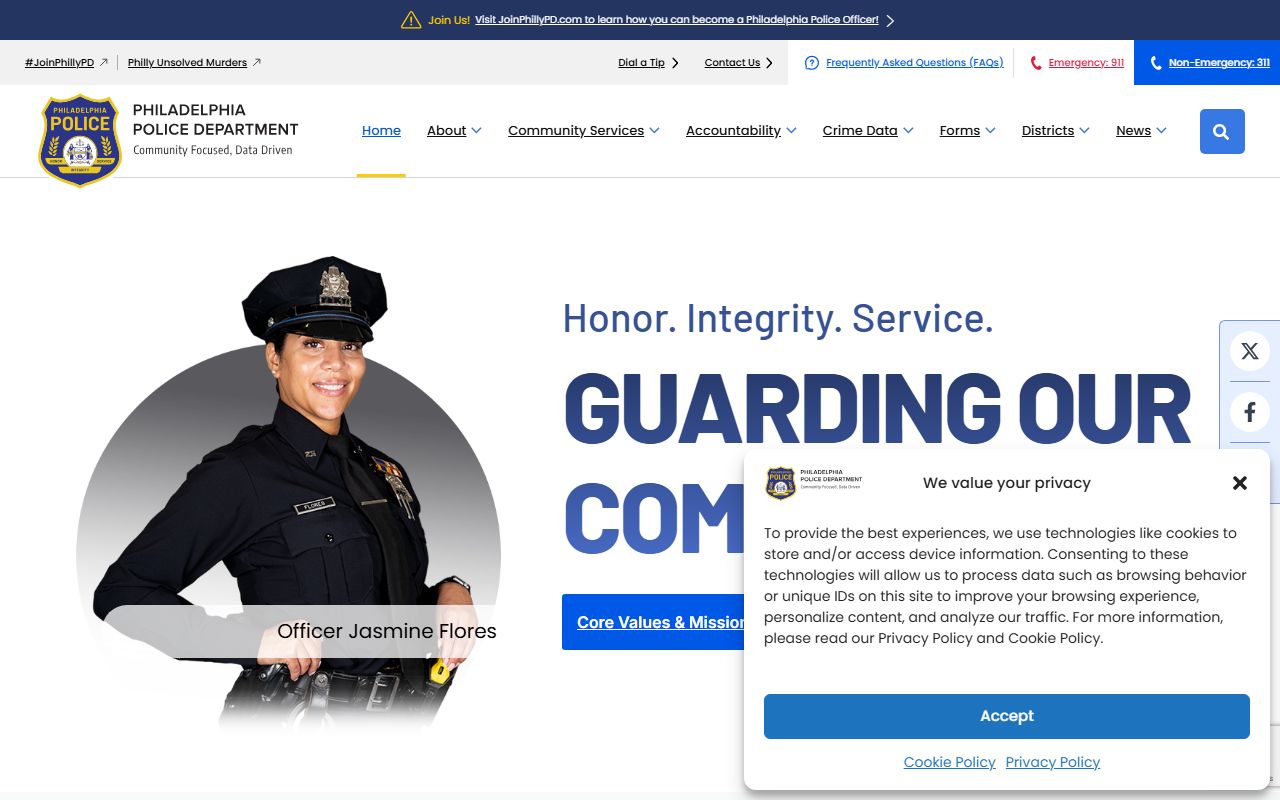
Pennsylvania enacted Megan's Law in 1995 following the national wave of sex offender registration legislation spurred by the 1994 federal Jacob Wetterling Act and the murder of Megan Kanka in New Jersey. The law has been revised multiple times since then, with the most significant overhaul coming when Pennsylvania incorporated the federal SORNA framework into its own statutes, now codified at Title 42, Chapter 97 of the Pennsylvania Consolidated Statutes.
In Philadelphia, the scale of compliance enforcement is substantial. The city's Special Registration Unit processes a high volume of initial registrations from offenders being released from SCI Graterford, SCI Chester, and other correctional facilities in the region, as well as offenders moving into Philadelphia from other counties or states. Out-of-state offenders who establish residence in Philadelphia must register within three business days and are subject to all Pennsylvania registration requirements regardless of what state they were convicted in.
The Philadelphia Police Department coordinates directly with the PSP Megan's Law Section to ensure that all registrations are entered into the statewide system promptly. The PPD is also responsible for conducting periodic in-person compliance checks and for carrying out SVP community notification whenever a predator-designated offender moves into any Philadelphia neighborhood.
Note: Philadelphia Megan's Law inquiries can be directed to the PPD or to PSP through meganslaw.psp.pa.gov.
Sex Offender Tiers in Pennsylvania
Pennsylvania uses a three-tier system to classify registered sex offenders and determine how long each individual must remain on the registry. The classification is based on the statutory offense of conviction rather than on an individual risk assessment, though SVP designations involve a separate clinical evaluation process.
Tier I includes offenses at the lower end of the registration spectrum. Offenders placed in Tier I must register for 15 years and report in person annually to verify their registration information. Examples of Tier I offenses may include certain forms of indecent assault that do not involve aggravating circumstances.
Tier II covers a more serious range of offenses, including sexual exploitation of minors through images or recordings, statutory sexual assault involving specified age gaps, and other enumerated crimes. Tier II registrants must maintain active registration for 25 years and report in person every six months.
Tier III encompasses the most serious offenses, including rape, involuntary deviate sexual intercourse, aggravated indecent assault, and similar crimes involving violence, coercion, or very young victims. Tier III registrants must register for life and appear in person every 90 days to update and verify their information.
Sexually Violent Predators form a distinct category above the standard tiers. An SVP designation results from an assessment conducted by the Sexual Offenders Assessment Board, which evaluates whether the offender has a mental abnormality or personality disorder that creates a high likelihood of future sexual reoffending. When a court accepts the SOAB's conclusion and designates an individual as an SVP, that person registers for life and is subject to mandatory community notification. Full details about the SOAB are available at pa.gov/agencies/soab/. All registration requirements are governed by Title 42, Chapter 97.
Note: An offender's tier classification is listed on their public registry profile and determines their reporting schedule.
Philadelphia Law Enforcement and Registry Oversight
The Philadelphia Police Department handles all primary Megan's Law enforcement within the city. The department's Special Registration Unit is the central point of contact for new registrants arriving in Philadelphia, for offenders who need to update their information, and for compliance verification activities. Officers from the unit work across all six police divisions and coordinate with district-level officers who may encounter registered offenders during the course of routine policing.
PSP Troop K is headquartered in Philadelphia and provides a state-level presence within the city. Troop K officers assist with compliance activities and serve as the primary interface between the city's PPD and the PSP Bureau of Records and Identification, which maintains the statewide registry database. When an offender is found to be non-compliant or when a tip comes in through the statewide reporting line, Troop K and the PPD work together to investigate and, if warranted, to make an arrest.
Given Philadelphia's multiple registration sites and the volume of registrants, the PPD has developed internal protocols for managing the in-person reporting process efficiently. Registrants are typically assigned specific reporting locations and time windows based on their address, which reduces wait times and ensures that officers can conduct thorough verifications during each visit.
Note: For direct law enforcement assistance regarding registered offenders in Philadelphia, contact the Philadelphia Police Department at phillypolice.com or PSP Troop K.
Registration Requirements for Philadelphia Offenders
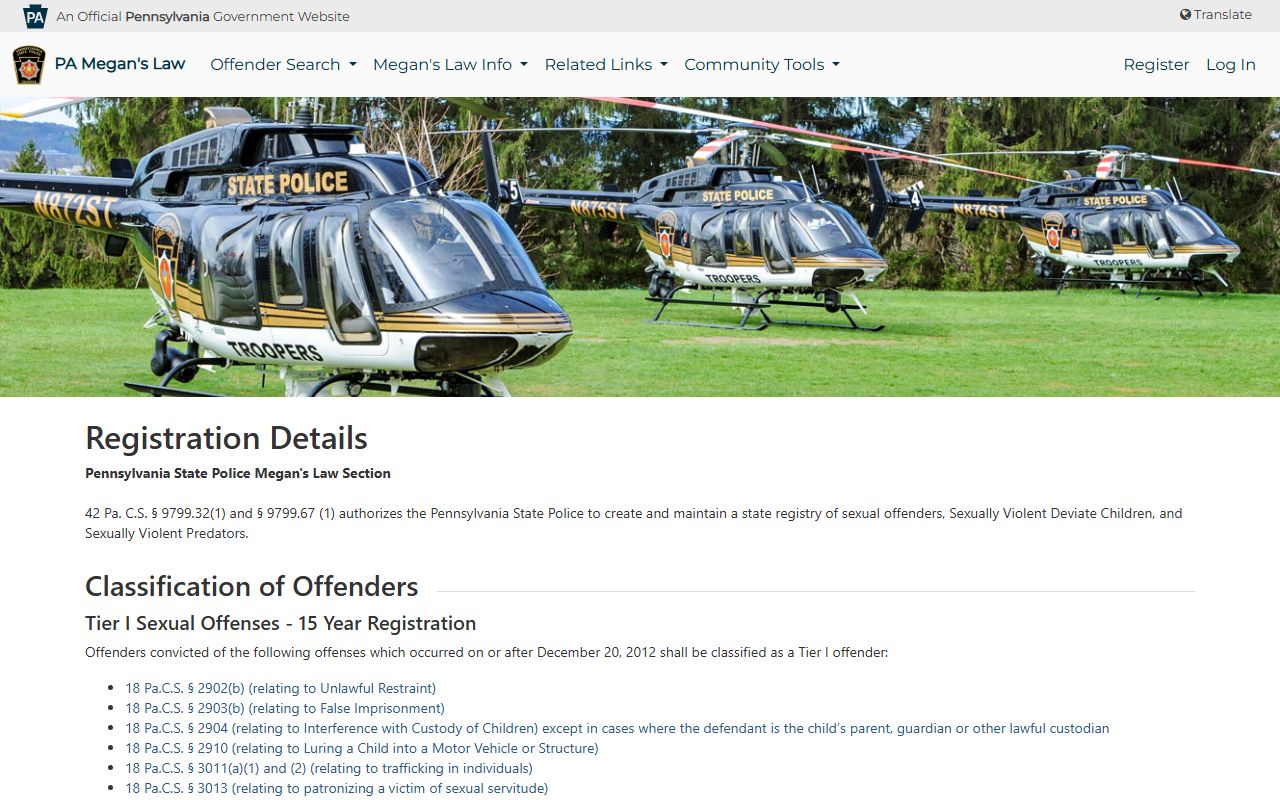
Every registered sex offender living, working, or attending school in Philadelphia must meet the same registration obligations imposed by Pennsylvania law on registrants anywhere in the Commonwealth. Initial registration must be completed within three business days of arriving in the city, starting a new job, or enrolling in a school or university program. Offenders leaving incarceration are typically processed through the registration system before they are released.
During each required in-person reporting visit, the registrant must provide or confirm their current home address and any secondary addresses, the name and address of their employer, the name and address of any school they attend, all vehicle information, all phone numbers, and all internet identifiers including email addresses and social media accounts. Any change in any of these items must be reported to the PPD's Special Registration Unit within three business days of the change occurring.
Temporary absences also carry reporting requirements. An offender who will be staying away from their registered Philadelphia address for seven or more consecutive days must notify law enforcement before leaving. Offenders planning to travel outside Pennsylvania for more than three days must report their travel plans in advance. These requirements apply regardless of the purpose of travel and cannot be waived.
Note: Full registration requirements are published at meganslaw.psp.pa.gov/InformationalPages/Registration.
Community Notification in Philadelphia
In Philadelphia, community notification is carried out by the Philadelphia Police Department whenever a Sexually Violent Predator registers or changes their registered address within the city. The SVP community notification protocol is governed by Title 42, Chapter 97, and the PPD follows it carefully given the density of the city's residential neighborhoods.
When an SVP registers a Philadelphia address, the PPD notifies all neighbors within 250 feet of the registrant's location. In addition, the 25 nearest neighbors are notified regardless of whether they fall within the 250-foot boundary. Schools within one mile of the SVP's registered address receive formal written notification. Day care facilities and licensed child care providers in the vicinity are also notified directly. Colleges and universities located within 1,000 feet of the registered address receive notification as well, which is particularly relevant in a city like Philadelphia with institutions including Temple University, Drexel University, the University of Pennsylvania, and numerous community colleges and trade schools.
These notifications are mandatory and are sent every time an SVP first registers in Philadelphia, moves to a new address within the city, or returns from a period of incarceration. The School District of Philadelphia coordinates with the PPD to ensure that all affected schools within the notification radius receive timely information. Community notification is not triggered by standard Tier I, II, or III registrants; it applies exclusively to individuals who have been formally designated as Sexually Violent Predators by a Pennsylvania court.
Note: Community members who receive SVP notifications from the PPD are encouraged to use the information for safety planning and not as a basis for harassment or vigilantism.
Reporting Non-Compliance in Philadelphia
Failure to comply with Pennsylvania's sex offender registration requirements is a criminal offense under 18 Pa.C.S. § 4915.1. In Philadelphia, where the PPD monitors a large number of active registrants, non-compliance investigations are taken seriously and are pursued aggressively when credible information is received.
Residents who suspect that a registered offender is not complying with registration requirements can report their concerns through several channels. The Pennsylvania State Police statewide tip line at 1-866-771-3170 accepts calls around the clock and allows anonymous reporting. Tips can also be submitted directly to the Philadelphia Police Department or to PSP Troop K. All tips are reviewed by investigators, and those that present credible evidence of non-compliance are referred for follow-up action.
Non-compliance can take many forms in an urban environment. An offender may be found living at an address different from their registered location, staying with a partner or family member without reporting the new address, starting a new job without updating their employment information, or simply failing to appear for a required in-person verification at the scheduled time. Any of these situations can form the basis for a criminal charge under state law. Penalties for failure to register can include substantial prison sentences, particularly for repeat violations.
Note: Reports of non-compliance in Philadelphia can be submitted to the PPD, PSP Troop K, or via the statewide tip line at 1-866-771-3170.
Nearby Counties
Philadelphia County borders three Pennsylvania counties, each with their own registered sex offender populations accessible through the state registry.